.png)
Tourism operators from Bosnia and Herzegovina and Montenegro strengthen their competencies for working with digital nomads
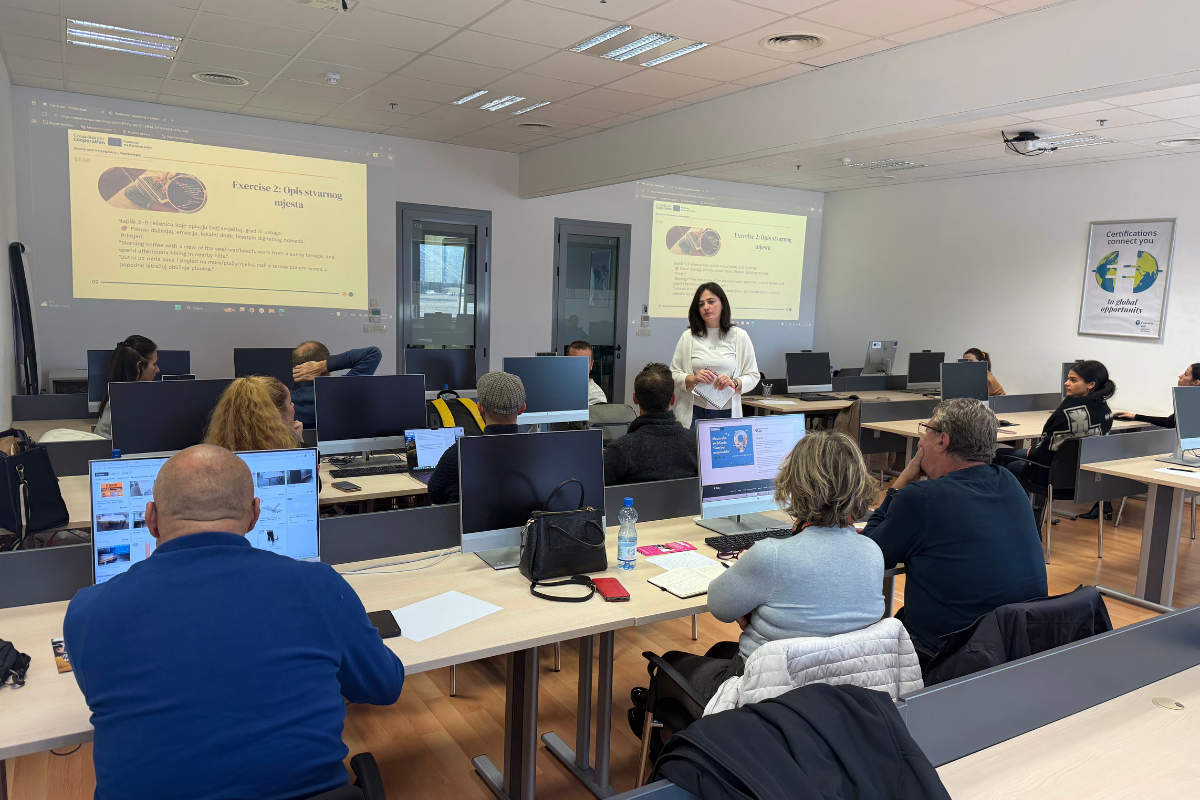
Thirty tourism operators from Bosnia and Herzegovina and Montenegro took part in the third in a series of trainings within the STAR project – Strengthening the tourism offer in the cross-border area by attracting digital nomads to rural regions, financed by the European Union. The training was an opportunity for participants to gain first-hand insight into the needs of digital nomads and to learn how to adapt their offer to this growing global trend.
During the three-day training, participants used practical tools to learn about copywriting in tourism, the differences between content and marketing text, the psychology of purchasing and tourist motivation, as well as the style, tone, and emotions in writing tourism content.
They also worked on writing effective descriptions, titles, and calls to action, while becoming familiar with the possibilities of using AI tools and Canva to support their daily work. During practical exercises, they created real descriptions and content for destinations and services aimed at digital nomads, receiving feedback from their colleagues to further improve their work.
Digital nomads today increasingly choose destinations that offer good internet connectivity, inspiring surroundings, and authentic local experiences—something that rural areas of Bosnia and Herzegovina and Montenegro can provide.
These trainings strengthen the competencies of tourism operators, enabling them to create content that attracts a new generation of travelers and contributes to the sustainable development of communities on both sides of the border.
The project is co-financed by the European Union through the IPA III CBC Program Bosnia and Herzegovina – Montenegro 2021–2027.